
0
Published projects
Reviewed histories to inspect.Waterline IQ is launching soon. Ask about early access.
Coverage & evidence
Explore selected Oregon water sources, reviewed project histories, and the evidence behind them. See what is covered—and where the record remains incomplete.
14 days · $0 today · card required
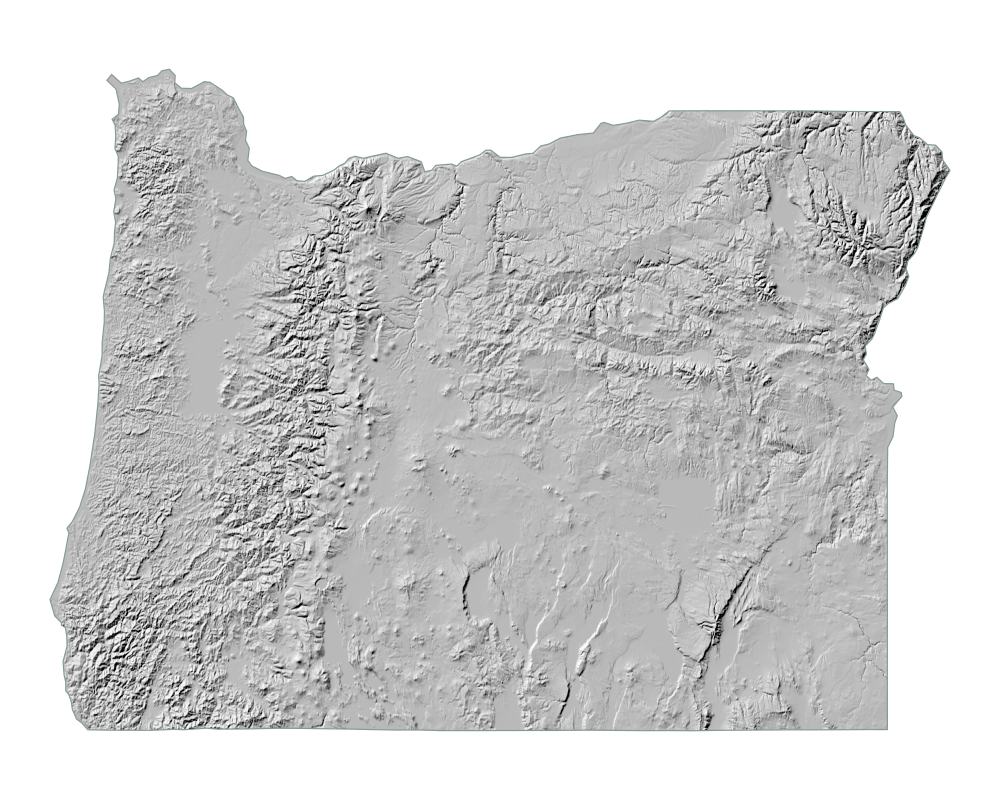
Current coverage snapshot
No successful official-source refresh has been recorded yet. Schedules vary by source.
Registry and archive counts include material not yet reviewed.
Published, reviewed coverageSource registry & preserved archive
Published projects
Reviewed histories to inspect.Public owners
Owners with a published project.Official source families
Active official programs and publishers.Preserved record versions
Retrieved versions retained for traceability.Project and owner counts describe published, reviewed coverage. Source and document-version counts describe the active registry and preserved archive; inclusion there does not mean every document has been reviewed or every source has completed a successful check.
Each source follows its own check schedule, so this is the newest successful source run—not a claim that every source was refreshed on the same day.
The evidence, made useful
Open the record. See what it establishes. Keep the next decision separate.
Review the product overview to see how official evidence and uncertainty appear in a project record.
See how project records workOfficial records across the lifecycle
Waterline IQ brings together selected Oregon state and local records. Each source contributes a different part of the project history; no single publication is expected to show the entire lifecycle.
Water master plans, wastewater and stormwater plans, capital improvement programs, budgets, infrastructure programs, and official project pages.
See needs taking shape in an owner’s capital program.
Oregon Health Authority, Oregon Department of Environmental Quality, Business Oregon, priority lists, funding notices, and related official program records.
Distinguish requested financing from an established award.
Board and council agendas, meeting packets, staff reports, minutes, resolutions, authorizations, and other published decisions.
Connect public decisions to the project they move forward.
Published consultant activity, permit records, regulatory review, certifications, plan review, and approval milestones when they establish project position.
Read approvals in the context of the broader project.
OregonBuys and local requests for qualifications, proposals, or bids; response dates; requirements; addenda; and other official changes to the response path.
Follow official requirements and changes to the response path.
Bid tabulations, intended selections, authorized awards, executed contracts when established, and official construction or completion updates.
Keep selections, executed contracts, and construction distinct.
Oregon public water scope
These categories define the Oregon public water scope. Inclusion here does not mean every project or source in that category is covered.
From source to published intelligence
The workflow preserves the public record and keeps uncertain matches or unsupported conclusions out of published project facts.
Last successful check
Original records retained
Material facts checked before publication
Evidence and unknowns remain visible
The source registry records the scope, check schedule, and latest successful check for each monitored source. Planning, funding, public decisions, permits, procurement, awards, and construction records contribute different parts of the history.
Original files, source web addresses, publication context, retrieval dates, and materially different document versions remain traceable. A later source update does not erase the earlier evidence.
Names, identifiers, public owners, facilities, funding, permits, procurements, awards, firms, and people are connected only where the evidence supports the relationship. Uncertain matches are not silently merged.
Material facts, relationships, and ambiguous records pass through review. Unreviewed material stays out of published project intelligence; unresolved facts remain unknown or explicitly disputed.
Published records retain the supporting passage, locator, official source, dates, review status, confidence, and version history. Official facts, reviewed interpretation, forecasts, and consequential unknowns stay distinct.
What the evidence establishes
Official fact
Use it to establish the project’s documented position.
Waterline IQ interpretation
Use it to understand the consequence without overstating the evidence.
An interpretation is labeled separately from the official fact.
Waterline IQ forecast
Use it to plan a follow-up, with the uncertainty still visible.
A dated source does not establish a procurement date.
Freshness, completeness, and security
Selected Oregon sources. Public water infrastructure is the launch boundary.
Not complete statewide discovery. A monitored source does not mean every project is known.
Freshness varies by source. Each source retains its own check history.
Check schedules vary by source. Waterline IQ records the last successful check and whether a source needs attention instead of presenting every source as equally current.
Coverage is limited to Oregon public water infrastructure. It does not include general environmental remediation, brownfields and hazardous waste, solid waste, or projects outside Oregon.
A monitored source does not mean every project is known. Waterline IQ does not claim complete statewide discovery or guarantee that every official publication appears immediately.
Not researched, not established, verified absence, and disputed official claims remain different states. Conflicting records stay visible until later evidence resolves them.
Projects, owners, firms, facilities, and people are not silently merged when the evidence does not establish that they are the same entity.
Waterline IQ excludes sensitive coordinates, vulnerability details, emergency-response material, and internal control-network information.
Tell us which public agency, utility, program, permit source, project page, or procurement record matters to your market. We evaluate every suggestion against the same access, evidence, and security standards.
Put the evidence to work
Review scope, funding, and timing in one real Oregon project. Follow the evidence, see what remains unresolved, and decide whether the opportunity fits your team.